
Selebi Mine
LOCATION:
OWNERSHIP:
DEPOSIT TYPE:
STAGE:
PRIMARY METALS:
Highlights
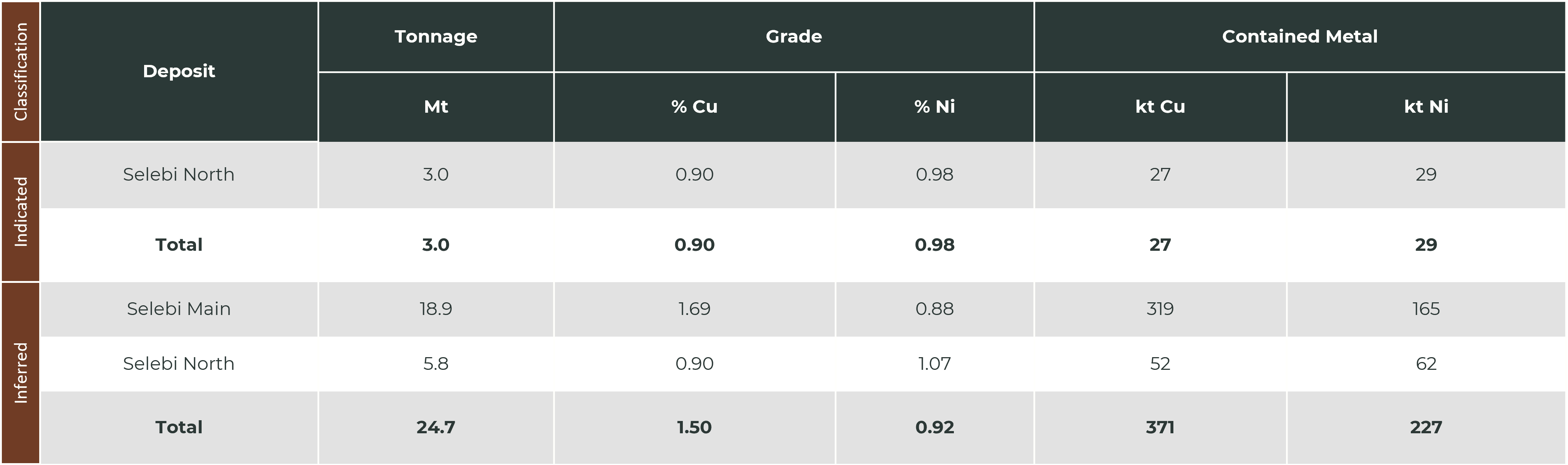
Notes:
- CIM (2014) definitions were followed for mineral resources.
- Mineral resources are estimated at a NSR cut-off value of $70/t.
- Mineral resources are estimated using long-term prices of US$10.50/lb Ni and US$4.75/lb Cu and a US$: BWP exchange rate of 1.00:13.23.
- Mineral resources are estimated using nickel and copper recoveries of 72.0% and 92.4% respectively, derived from metallurgical studies which consider a conceptual bulk concentrate scenario.
- Bulk density has been estimated and averages 3.39 t/m3 at Selebi Main and 3.60 t/m3 at Selebi North.
- Mineral resources are reported within conceptual underground reporting shapes considering a minimum thickness of 1.5 metres.
- There are no mineral reserves.
- Mineral resources that are not mineral reserves do not have demonstrated economic viability.
- Totals may not add or multiply accurately due to rounding.
Geology
The deposits in the Project area are categorized as ortho-magmatic Cu-Ni sulphide-type deposits. They are hosted within amphibolite and understood as a tectono-metamorphically modified tholeiitic magma parent with an immiscible sulphide melt which has undergone all the phases of deformation that have affected the enclosing gneisses. They form part of the Selebi-Phikwe belt of intrusions that also contain the Phikwe, Dikoloti, Lentswe, and Phokoje deposits.
All mineralization horizons pinch and swell, are conformable to the gneissic foliation, and are hosted within or at the hanging wall contact of amphibolite with the gneissic country rocks. Mineralization horizons range in thickness from very thin to over 20 m thick and are commonly one metre to three metres thick (deposit dependent). Orientation follows country rock foliation, and the zones can dip moderately to steeply, and can extend from 150 m to over 2,000 m. The principal sulphide minerals are pyrrhotite, chalcopyrite, and pentlandite which occur in massive, semi-massive, and disseminated form. Pyrite occurs as localized overgrowth. Magnetite occurs as rounded inclusions in massive sulphides and as later overgrowths.
Exploration Potential
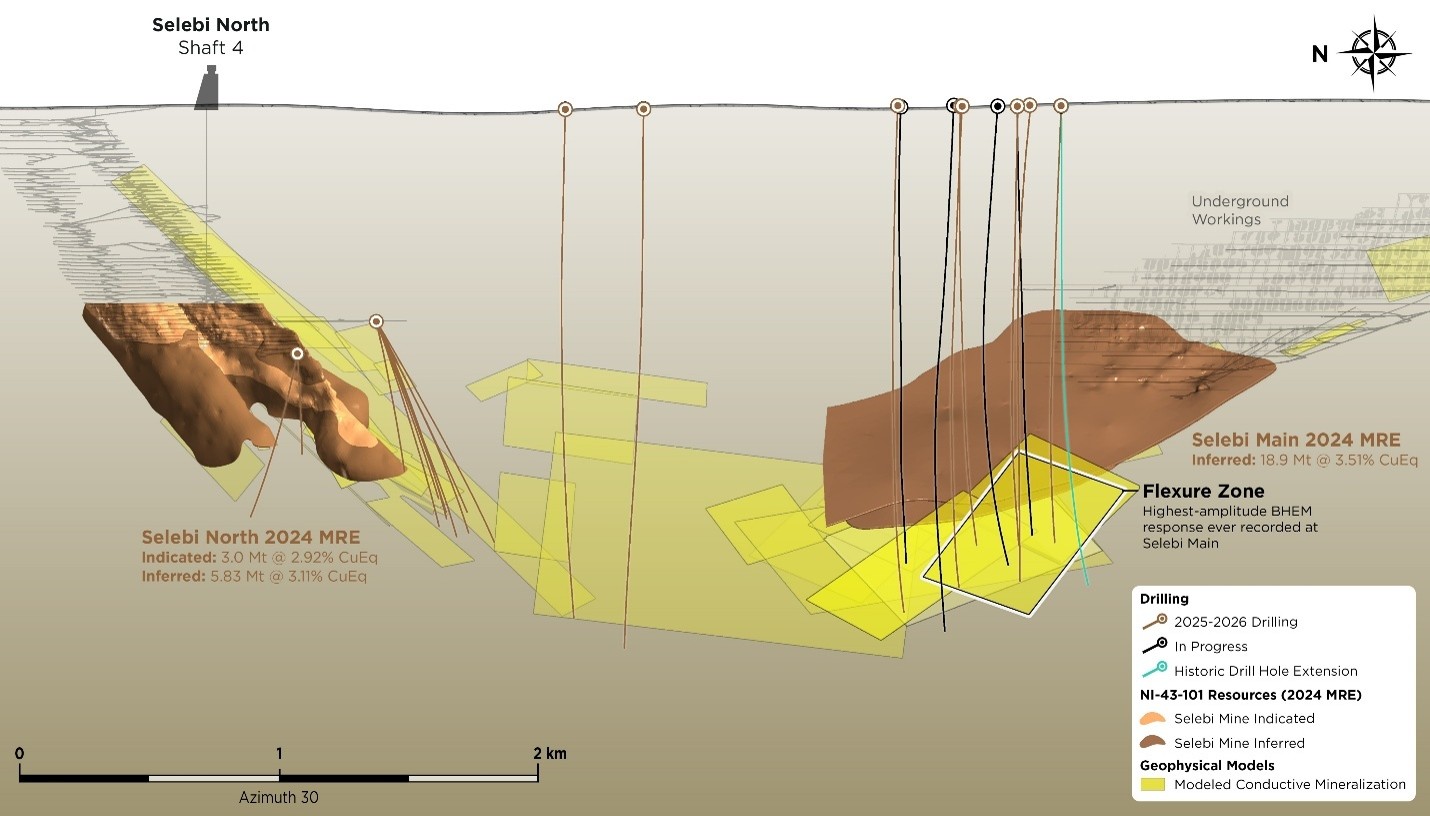
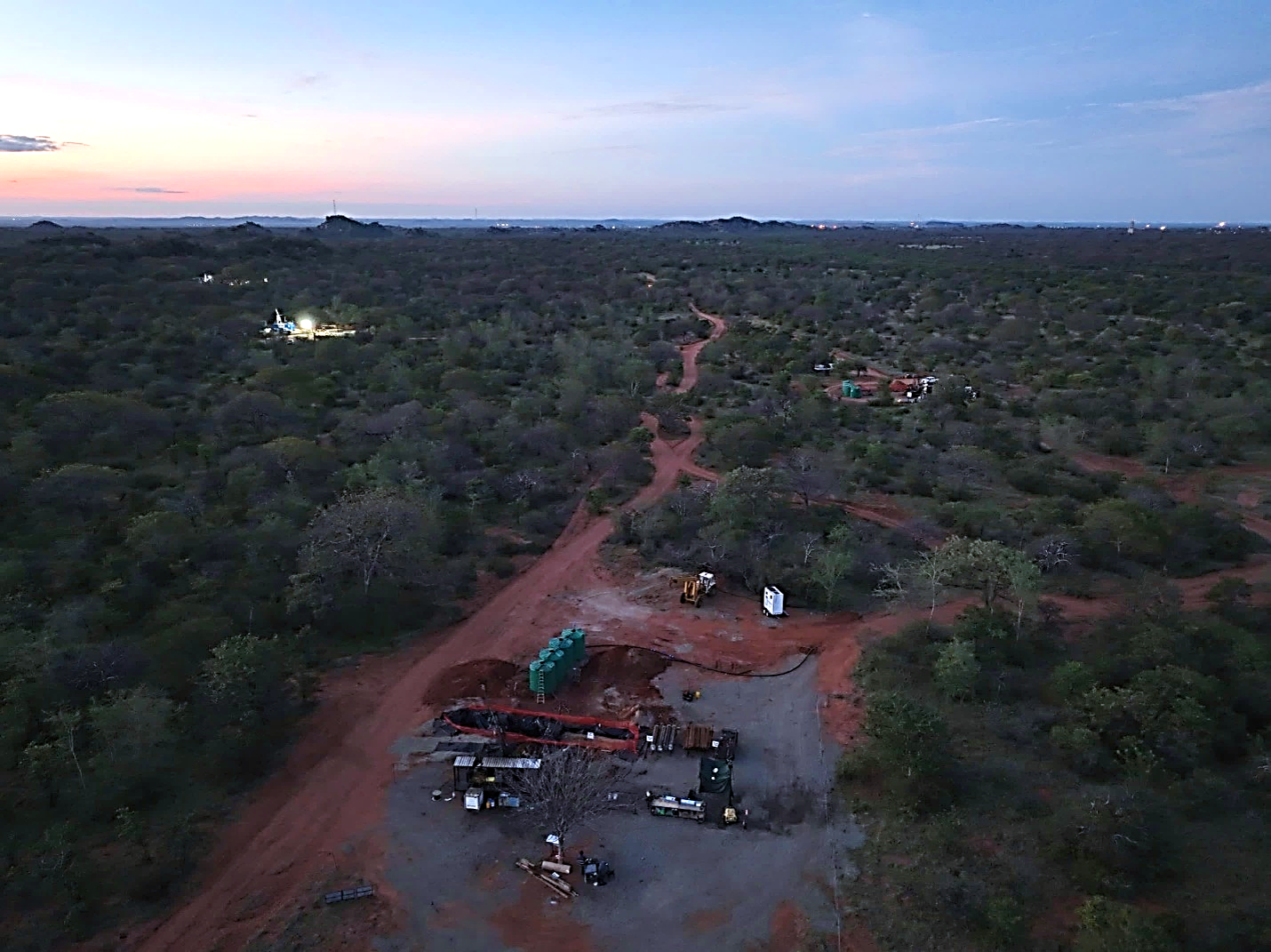
Following the acquisition of Selebi Mines in January 2022, the Company began an exploration program to follow up on these results, completing a 15,074 metre drilling program focused on the down-dip edge of the historical Selebi resource. More than 40 historical drill holes were reopened and surveyed using BHEM, with results consistently indicating increasing conductivity down-dip and supporting the interpretation that the mineralized system remained open at depth and was much larger than previously defined by drilling.
Desktop reviews of the BCL assets in liquidation began in December 2019 and an Indicative Offer was submitted in June 2020. Following its selection as the preferred bidder in February 2021, the Company completed comprehensive due diligence, including the evaluation of drilling and resource data, and inspection of mining and processing infrastructure. New BHEM survey data were collected in historical drill holes and samples were sent for concept level metallurgical studies. The primary objectives of the due diligence work was to determine the potential size and extent of the remaining mineral resource beyond the historical mine workings, and determine if saleable copper and nickel concentrates could be produced with reasonable recoveries.
Of great interest was historical drill hole sd119, that intersected 38.5 m grading 1.58% Ni and 2.44% Cu, including 21.4 m grading 2.34% Ni and 3.39% Cu, located approximately 300 m beyond existing mine workings and 1,200 m below. BHEM
surveying by BCL in hole sd140, drilled down-dip of sd119, identified a strong off-hole conductor that indicated a large conductor associated with this intersection.